


A year ago, Grön was an edibles brand in nine states, and Wyld was about to buy it. When the deal was announced in January, Grön founder Christine Apple told Cannabis Now that the Portland, Ore., brand had “passed over those older legacy states that are more saturated,” including California, Colorado, Washington and Michigan. Now, Grön is in all four.
Since September, Grön has launched in six new states and relaunched in Nevada, bringing it to 15 states plus Canada.
That growth traces back to a cup of coffee. Draper Bender, Grön’s president, helped set the deal in motion when he sat down with Wyld founder and CEO Aaron Morris, and he has spent the months since bringing the two companies together.
Cannabis Now spoke with Bender about how the deal came together, Grön’s place in the Wyld lineup, the brand’s record-setting Halloween edition and what comes next.

Photo courtesy of Grön
This interview has been edited for length and clarity.
Dana Murphy: To start, tell me a little about your role. What does being Grön‘s president look like day to day right now?
Draper Bender: We’re almost at the tail end of all our integrations with Wyld. What we thought was going to take maybe two years has come down to almost 10 months. By the end of this month, we’ll be fully integrated across operations, sales and distribution, marketing, finance and all the other core functions of the organization.
So I’ve been spending a lot of time with Aaron and the rest of the team making sure this is as seamless as possible. That means getting the teams ingrained with each other, making sure cultures are aligned and making sure we’ve got the best people in the roles to drive Wyld into the next massive growth curve.
DM: Congrats on doing that in under a year instead of two. It’s quite the feat. Back in January, Christine told us the deal started when you had coffee with Aaron and came back saying, “I have an idea.” What did that conversation look like, and how closely has this past year resembled what you pictured?
DB: Aaron and I had been kind of frenemies for about two years before that conversation. Over that time, we’d talked several times and realized how similar the two businesses were, from operations to sales and marketing. As we were sitting there, I just hurled this idea: What does this look like if the two companies come together?
My basis for it was the data. We’d been spending a lot of time in platforms like Hoodie and Headset, and Wyld was the 1,000-pound gorilla in the room. It was always, “How do we beat them?” So we studied the brand and how ours compared. The interesting thing we saw was that the brands complement each other on a shelf. When a Grön product and a Wyld product were both on the shelf, the category grew. If it was just Grön, we could stabilize the category, but we didn’t see real growth. It was the same for Wyld in their data.
From an M&A standpoint, there were simple things that made a ton of sense, like the synergies with people, facilities and oil procurement. Grön was in nine markets and Wyld was in 17, so there was an immediate plug-in for eight markets within the first 18 months. But the big rationale was that the two brands didn’t cannibalize each other. We’re seeing that now. After integrating the sales team in several markets, sales have grown and the category has grown. What Aaron and I originally talked about has been proven.
DM: Was Wyld always the top contender, or did you ever consider a different partnership?
DB: A few of the larger verticals said they’d love to have a conversation, but it was more like a joint venture, and it didn’t make much sense in terms of structure or picking up the synergies. What’s important to understand about Wyld is that they’ve built the largest sales and distribution organization in the whole industry. There are a few other brands, but none of them had the infrastructure in place to make Grön grow large and national at the pace and scale Aaron and Wyld can. That was the question for us: Who can really bring the Grön brand national?
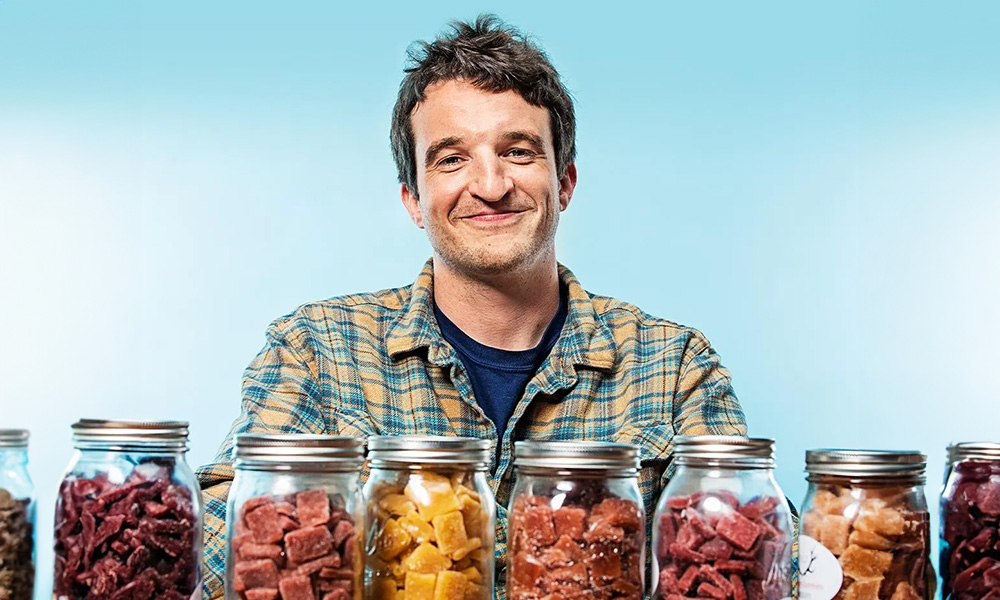
Photo courtesy of Wyld
DM: Wyld said it would help Grön grow “without compromising what makes Grön special.” Now that you’re about to hit the one-year mark, what’s changed? What have they helped you do that you couldn’t have done on your own?
DB: The big one is reach. Around 2022 or 2023, everybody was super focused on dominating the West: California, Arizona, Nevada. Grön’s strategy was, while everybody’s focused on the West, we’re going to focus on the East. We captured a ton of market share and top positions on the East Coast. Now, through the Wyld platform, we get to go back West to Colorado, California, Washington and Nevada, really great markets that are hyper-competitive. Wyld can plug us into 80% or more of each of those markets from a sales standpoint.
The second part was pricing. Wyld’s portfolio has Good Tide, their premium brand, and Wyld, which is mid-tier plus, but there was nothing at value plus. I don’t want to devalue what Grön is, but we were going to sell the portfolio as good, better, best: Wyld at better, Good Tide at best and Grön at good. That tier is for people who shop aggressively on price or look for promos but still want a really strong quality product. In a lot of markets, smaller brands, which I call ankle biters, are putting pressure on the mid shelf by being aggressive on price and promo. So there was a price adjustment and a strategy adjustment for Grön inside the Wyld portfolio. Aaron’s constantly saying, “Don’t be surprised if you see Grön outpace Wyld in the next couple of years,” because that good bracket is where the majority of the volume is.
We’ve also combined departments under one roof. And because we’re purchasing more distillate and other ingredients, we can be more aggressive with our suppliers. We saw some of those efficiencies immediately.
DM: Wow, that’s amazing. It sounds like it’s been pretty smooth sailing. On the other side of things, what’s been the hardest part of the past year?
DB: The hardest part of these transactions is always the human component. It’s very easy for Aaron and me to sit in a room, look at all these synergies on paper and say they make sense. But we’re a very small piece of that. It’s the people who have to execute it, and that’s always challenging, especially when facilities are being shut down because of those synergies.
We were very objective about roles. It was about who’s the most qualified person, not who’s been at Wyld or Grön the longest. Then there’s having to lay off people who have been with you for years on both sides. There were people with us for seven or eight years who didn’t make it over. And there’s the uncertainty when people don’t know what’s next for them.
As quick as this was, we rolled it out gradually. We didn’t close on Jan. 30 and start making cuts the next day. We spent about four or five months letting the business breathe and seeing where things came together naturally. Marketing integrated organically because we had two strong department leaders who just put it together. Sales, the one we were most sensitive to, had its last integration two or three weeks ago. Markets were taken over slowly, so it was less abrupt for the team, and we laid out the timeline so people could plan accordingly. It wasn’t a quick rip of the Band-Aid.
DM: That makes sense. Moving into the expansion: In January, Christine said Grön had passed over some legacy markets, and now it’s in all of them. When it came to launching this fall, how did you choose the states?
DB: I wish I could give you a very sexy answer about assessing the data. It was really about facility bandwidth and what infrastructure was in place to support the markets. Our MEGA is a high-volume SKU. It’s our single-serve 100 mg product, and because of where we price it, it requires a ton of units in a market. We wanted to make sure it wasn’t going to break our team or our facilities.
When we said internally that we were going to launch across seven or eight markets, there was a lot of pushback: How do we plan on doing all this in the next year? But the two companies had such similar manufacturing infrastructure that launching a Grön product in a Wyld market was the equivalent of launching a new SKU. There’s been a ton of marketing work behind it, but getting product into a market came down to which facilities could support it, what the go-to-market strategy was and how ready our sales team was to start beating down doors.
DM: One of those states, Nevada, was already a Grön market earlier this year. Was this a relaunch, and what did you do differently?
DB: Grön was originally a licensing market in Nevada. With the transaction, we terminated the licensing deal and relaunched Grön inside a Wyld facility. Before, Grön in Nevada only had Pearls. With the relaunch, we added MEGAs, and we’ve seen great adoption since.
DM: Will MEGAs follow in the other new states, where you’ve launched Pearls only?
DB: Definitely. Going forward, new markets will have both Pearls and MEGAs at launch, because having both is a core part of our selling strategy. By the end of this month, you’ll see MEGAs across a majority of the seven markets we most recently launched.
DM: I want to talk about Grön Arcana, since it was so successful. Where did the idea for a tarot-themed Halloween edition come from, and why the name Arcana?
DB: This is our third year doing a Halloween LTO [limited-time offer]. It’s our way of having a fun moment to activate in all the communities and markets we’re in. Every year we do a new theme. The first year was old horror movies, the next year was Bite Club, which was very vampire-focused, and this year it was Arcana.
I wish I could tell you we had a super creative process, but really, we asked the whole company for ideas. We got maybe 115 recommendations back, and a ton of people wanted a tarot card, witchy theme. It’s very culturally relevant right now, especially in some of the newer markets we’re launching in. We’re an employee-first organization, and we want everyone to feel involved, so seeing that outpouring made it a no-brainer.
As for the name, calling it a tarot or witch theme just didn’t feel right. Arcana is this mix of tarot and sorcery that fit beautifully with how we wanted to talk about it with consumers.
DM: You mentioned asking the whole company for ideas. Is crowdsourcing something you’ve done before, and do you plan to keep doing it?
DB: This was actually the first year we’ve done that. What we got the most out of it was the level of engagement from our internal teams. There are the consumers we do it for, and there are the internal teams who put a ton of time and effort into the day-to-day. It’s nice to get their input, so it’s probably something we’ll do again next year.
DM: I love that. And your team’s pick became your best-selling limited edition to date. What do you think drove that?
DB: A lot of brands execute a strategy and want to see immediate results. What people don’t get right about branding is that it’s a process. It’s a marathon. In 2023, we launched the horror movie theme, and it was really strong. I think it added about $360,000 in revenue for October, and that was only across five markets. Last year, with Bite Club, we learned a lot. People wanted custom swag. They really engaged with events, so we’re throwing more. And we learned what level of investment to make in advertising and digital. So this year, we had two years of lessons.
We also had two years to train budtenders and consumers to expect something from Grön in October. And every year, we make new tweaks that get consumers excited, like flavors they’ve never had before. This year, we introduced rosin.
DM: Moving from limited editions to your core lineup: Can you walk me through the ratios in the Pearls and why you chose them?
DB: We spend a lot of time on internal testing. We have someone dedicated to R&D who’s constantly playing with new and emerging ratios. We’ve got 3:1, 1:1:1, 4:1, 2:1:1, all these different formulations, to be super effect-driven. Our products are all very flavor-driven and taste great, but if somebody takes one of our 1:1:1 sleep gummies, we want them to clock out. That’s going to be their go-to sleep SKU. Same with our Blueberry Lemonade, a 3:1 [CBG to THC], which is one of our top-selling sativa SKUs. That comes down to the ratios.
A lot of people in the industry right now do standard formats like 2:1 or 1:1. We like to be relatively exotic with our ratios, but only as long as they’re effect-driven.
DM: Last question: After a year like this one, what’s next for Grön in 2027? This time next year, what are you hoping to have pulled off?
DB: We’re going to keep expanding. Within the Wyld organization, there are probably three or four more markets we need to get into over the next six to eight months, which will complete our launches across Wyld’s markets. There are also a few new markets we’ve targeted and signed deals for, which will bring Wyld’s overall footprint to around 20 or 21 markets in the U.S.
We’ve got some fun new LTOs coming, and we’ll be expanding our rosin lines in both Pearls and MEGAs. And we’re taking another look at PIXLZ, which we launched this year. It’s a candy-coated gummy, similar to a cluster. We’re reassessing the ratios and strategy there, and we want to go as wide as regulations allow in that category.
The post Q&A: Draper Bender on Grön’s First Year With Wyld appeared first on Cannabis Now.
Read More: Q&A: Draper Bender on Grön’s First Year With Wyld
Comments are closed, but trackbacks and pingbacks are open.